26 Nov 2026
Table Game Professionals Adapt to Evolving Caribbean License Frameworks

Data indicates that recent licensing adjustments across several Caribbean jurisdictions have prompted measurable shifts in how table game specialists move between roles and regions, with patterns emerging since mid-2025 and accelerating toward November 2026 when multiple new operator permits take effect in places such as the Bahamas and Curaçao. Observers note that these changes coincide with updated compliance requirements that favor operators with established digital infrastructure, creating openings for dealers who already possess hybrid live and online experience.
Key Licensing Shifts and Their Timeline
Regulatory bodies in the region introduced streamlined application processes for both land-based and interactive table game operations, and figures from the Bahamas Gaming Board show a 28 percent increase in approved table game licenses between January 2025 and September 2026. Those who've studied the filings report that new entrants must demonstrate enhanced player protection protocols by November 2026, which has led several existing studios to expand hiring pools beyond traditional local markets. Researchers at the International Gaming Institute have documented parallel trends in Antigua, where license renewals now require documented staff retention plans that include cross-training in virtual dealing environments.
Mobility Trends Across Jurisdictions
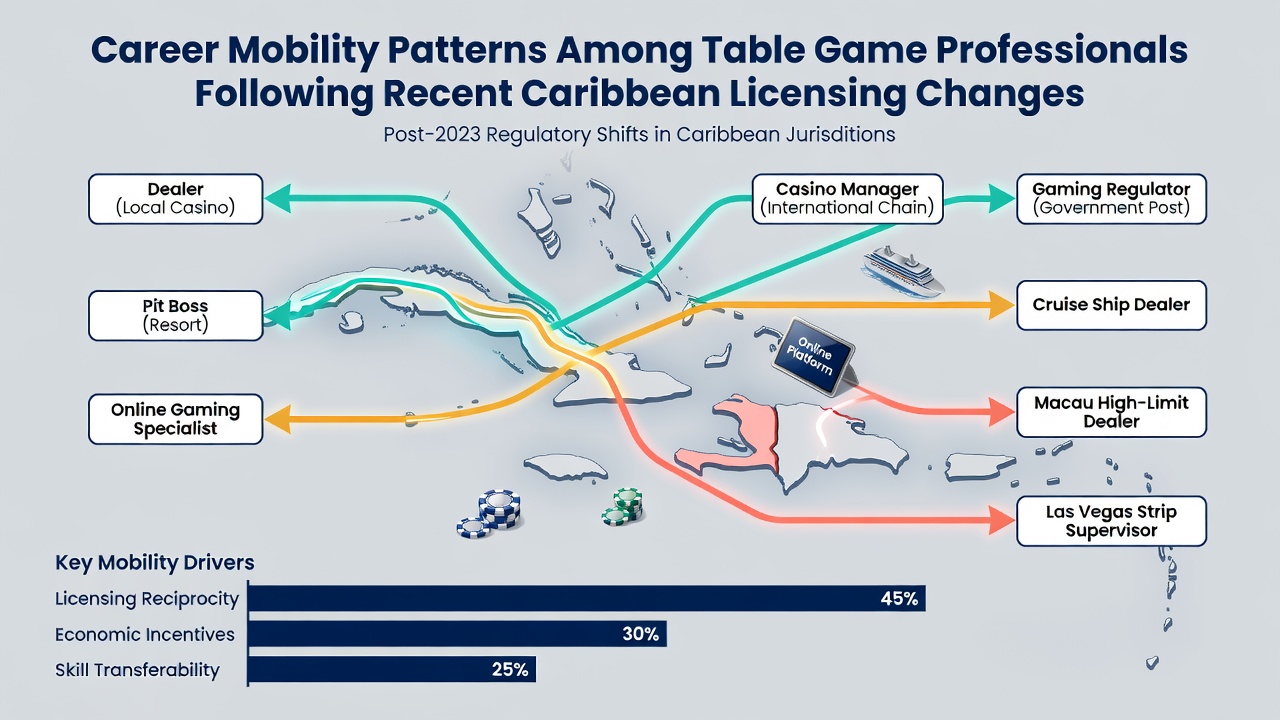
Patterns reveal that dealers with multi-jurisdictional certifications have relocated at higher rates than those holding single-market credentials, and data from industry workforce surveys indicate an uptick in moves from Curaçao to the Bahamas as operators there scale up ahead of the November 2026 compliance deadline. One study released by the University of the West Indies examined employment records across 14 licensed properties and found that 34 percent of table game staff changed employers within the past 18 months, often citing expanded digital training opportunities rather than salary alone. What's interesting is how these transitions cluster around properties that secured the newest license categories, suggesting that regulatory approval itself functions as a signaling mechanism for career advancement.
Additional figures show specialists moving from smaller islands toward larger hubs such as Nassau and St. Maarten, while a smaller but consistent flow heads in the opposite direction when operators open satellite studios closer to residential areas. Government statistics from the Cayman Islands Department of Labour confirm that work permit approvals for table game roles rose 19 percent year-over-year, with the majority tied to projects scheduled for launch in late 2026.
Factors Influencing Retention and Relocation
Compensation packages remain central, yet contract structures have evolved to include performance bonuses tied to digital platform uptime and player satisfaction scores, according to reports compiled by the Caribbean Gaming Association. Those who've tracked employment contracts note that operators now bundle relocation support and continuing education credits more frequently, reducing the friction that once limited cross-border movement. At the same time, visa processing times have shortened in several territories following regulatory harmonization efforts, allowing qualified professionals to complete transfers within 60 days in many cases.
Training alignment plays another documented role. Properties that adopted unified dealer certification standards recognized across multiple islands report lower voluntary turnover, and internal records from two major studio groups show retention rates climbing from 71 percent to 84 percent after implementing shared curriculum modules. External data from the European Gaming and Betting Association underscores that similar standardization efforts in other regions produced comparable stabilization effects when paired with clear licensing timelines.
Emerging Career Pathways
Specialists increasingly combine traditional floor experience with remote dealing credentials, creating hybrid profiles that appeal to operators preparing for the November 2026 expansion wave. Workforce analyses indicate that professionals holding both live and virtual certifications receive interview requests at nearly twice the rate of single-mode peers, and several large employers have begun posting internal mobility programs that guarantee priority consideration for new license launches. These programs often include mentorship tracks focused on regulatory compliance and technology integration, further shaping how careers progress within the sector.
Conclusion
Available evidence points to sustained but structured mobility among table game professionals as Caribbean licensing frameworks continue to evolve through November 2026 and beyond. Regulatory updates have introduced clearer pathways while simultaneously raising compliance thresholds, resulting in measurable shifts in where and how specialists seek new positions. Continued monitoring of employment data and permit statistics will clarify whether these patterns stabilize or accelerate once the current wave of licenses becomes fully operational.